
Why We Shouldn't Fear the Future
Embracing AI, its a term Ive used a numorious times since Nov 2022. Hello, readers. I'm Ron Reichert, a lifelong tech enthusiast and entrepreneur based in Alberta, Canada. My journey in technology dates back to the 1980s, when personal computers were just starting to change the world. Over the decades, I've built and led numerous ventures in the tech space while also getting my hands dirty with practical trades work. This blend of innovation and real-world experience has given me a grounded perspective on emerging tools like AI. You can connect with me on LinkedIn here if you'd like to chat more.
I've been hands-on with AI since the very beginning—using ChatGPT on its public release day in late 2022 and watching it evolve ever since. But lately, whether scrolling social media or talking to people in person, I'm struck by the widespread fear and dismissal: "AI will steal jobs," "It's dangerous and out of control," or "It's just a fad that'll pass." It reminds me so much of the internet's early days. Let's explore this reluctance, back it with facts, and end on a note of genuine encouragement.
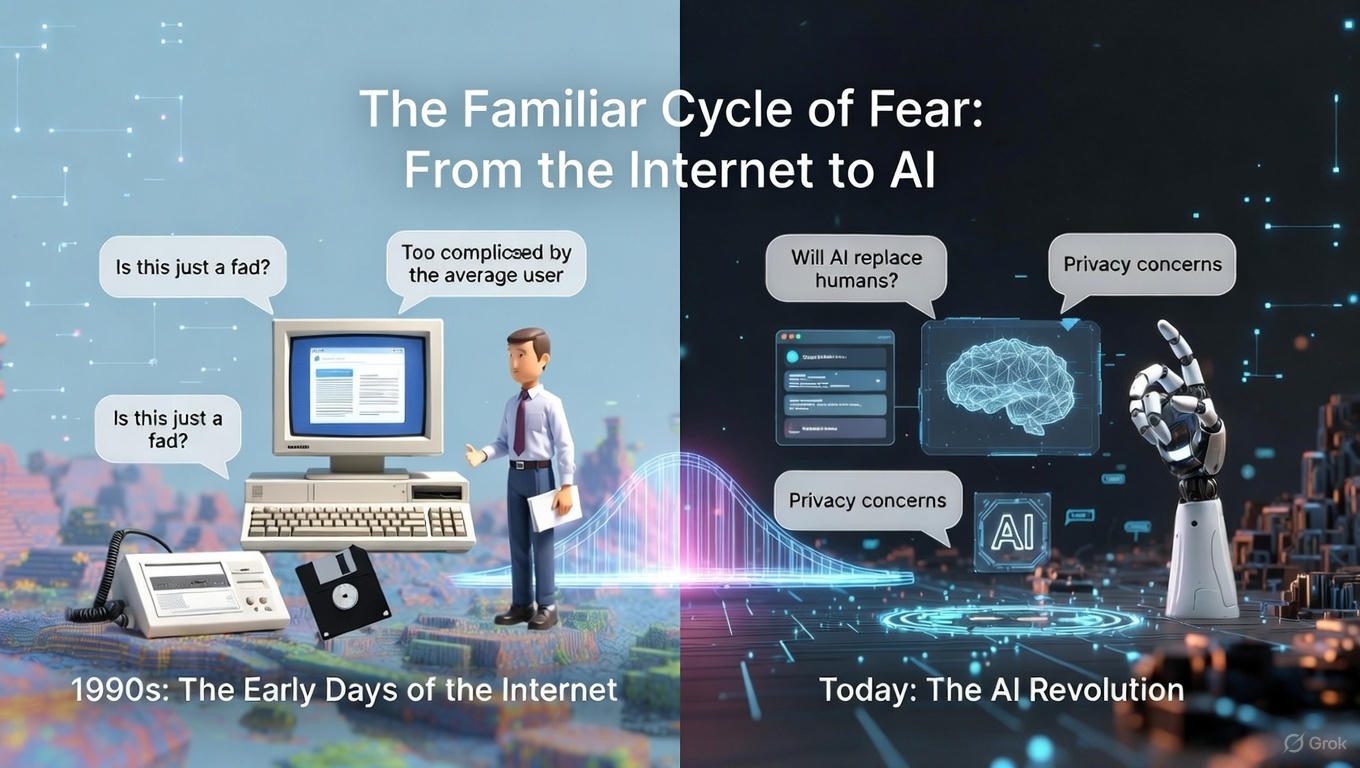
The Familiar Cycle of Fear: From the Internet to AI
In the 1990s, the internet faced the same skepticism. People worried about privacy, hackers, to slow to be useful and information overload—many dismissed it as a toy for geeks that would never go mainstream. Yet here we are, with the web woven into every aspect of life.
Today, AI triggers similar reactions. Global surveys show a stark divide: In high-income countries like the US and Canada, concern often outweighs excitement, with many viewing AI's rise warily. In contrast, nations like China (83% see more benefits than drawbacks), Indonesia (80%), and Thailand (77%) are far more optimistic.
On social media and in conversations, fears dominate in the West: job displacement, loss of control, ethical risks. In Canada, we're even lagging in AI literacy and trust compared to global peers, ranking near the bottom in training and adoption readiness. This dismissive attitude isn't new—it's human nature resisting change—but it risks leaving us on the sidelines.
The Reality: AI's Explosive Growth and Everyday Benefits
Despite the hesitation, AI adoption is surging. In 2025, global AI users reached around 378 million, with massive year-over-year growth. The market hit approximately $244 billion, on track for trillions in economic impact by 2030. Businesses are integrating AI at record rates, boosting productivity and innovation.
And the real-life wins? AI is already making things easier:
- Healthcare: Faster diagnoses, personalized treatments, and predictive analytics that catch diseases early—saving lives and reducing errors.
- Education: Adaptive learning tools that tailor lessons to individual needs, making education more accessible and effective.
- Productivity: Automating routine tasks, organizing workflows, and enhancing creativity—freeing humans to focus on what we do best.
In my own work, AI has streamlined research, idea generation, and problem-solving, amplifying what I can achieve.
The ChatGPT Moment: Queries Explode Overnight
When I say I was there on day one, I mean it literally. ChatGPT launched on November 30, 2022, and the world changed almost overnight.
In its first week, it was already handling over 10 million queries per day. By early 2023, that number had jumped to hundreds of millions daily.
Today, in 2026, ChatGPT alone processes more than 2.5 billion prompts every single day — a 250-fold increase in just over three years.
When you include other tools like Gemini, Claude, Grok, and Perplexity, total daily queries to generative AI worldwide almost certainly exceed 4–5 billion.
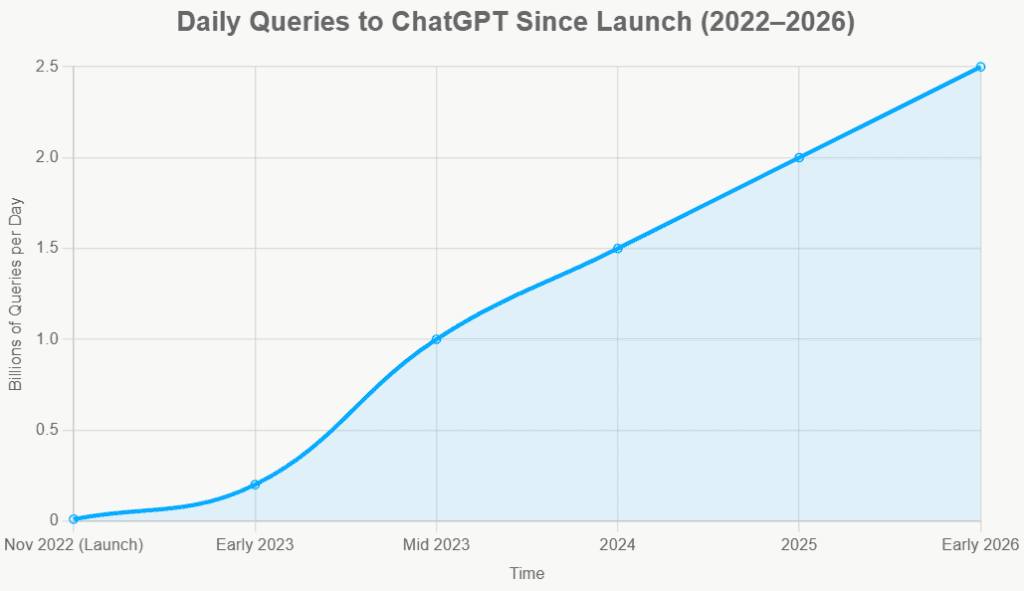
This isn’t gradual evolution — it’s the sharpest adoption curve in tech history. Faster than the internet, faster than smartphones. And it’s still accelerating.
That’s why the fear and dismissal I hear today feel so familiar. We’ve seen this movie before: a transformative tool arrives, many call it a fad or a threat, and a decade later it’s infrastructure we can’t imagine living without.
The Political Debate: Bans Won't Stop Progress
Politically, calls for AI bans or heavy restrictions are growing, driven by valid concerns like bias and misuse. But history shows bans often backfire—if one country halts progress, others (like the US and China, leading in investment and models) surge ahead. Canada risks falling further behind: Our business adoption lags the OECD average, and without bolder steps, we'll miss the economic and innovative gains.
A Heartfelt Encouragement: Embrace the Tool, Shape the Future
From my decades in tech, I've learned this: Tools like AI don't replace humans—they extend us. The internet didn't destroy jobs; it created millions more. AI will do the same, if we guide it wisely.
Don't fear it. Experiment with it. Learn it. Address the risks through education, ethical guidelines, and smart policies—not denial. This fantastic technology can make life better, healthier, and more creative for all of us.
I've seen AI grow from novelty to necessity, and I'm excited for what's next. Let's move from fear to curiosity. What’s your experience with AI? Share in the comments or reach out—I'd love to hear.
